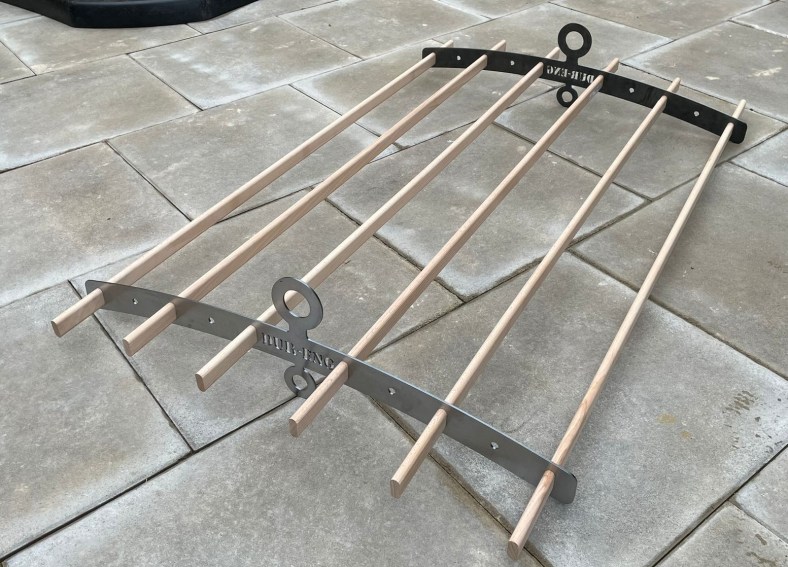
Not the most glamorous project – but worthwhile work nonetheless. I think it’s because I remember having one of these in the kitchen of the house I grew up in, but I do like these things.
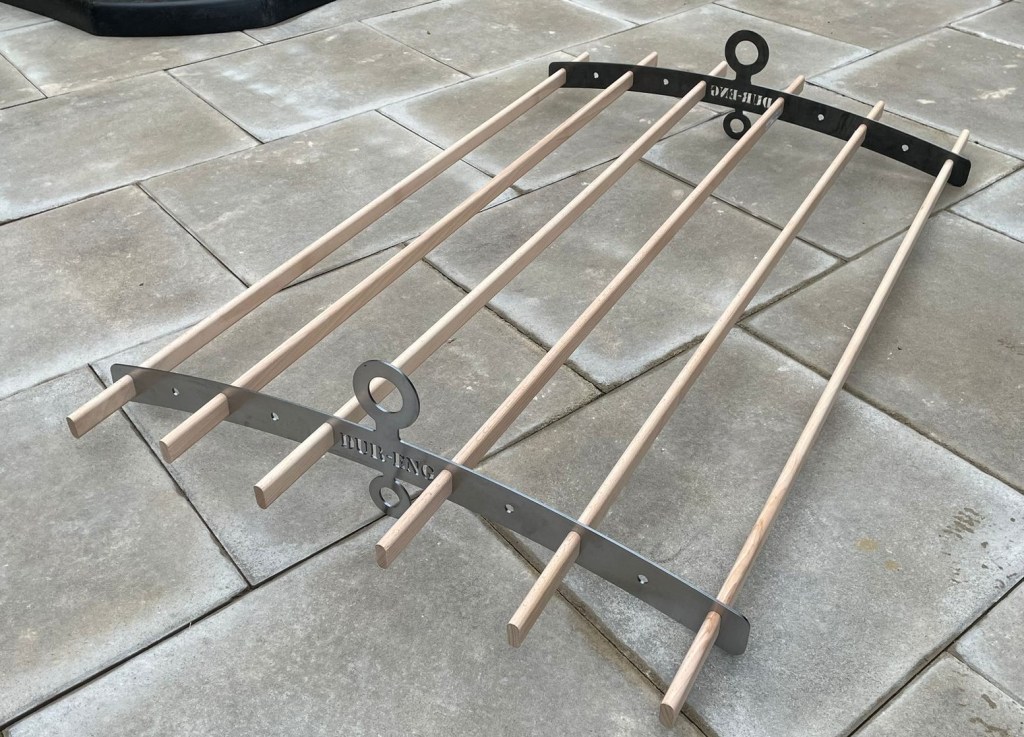
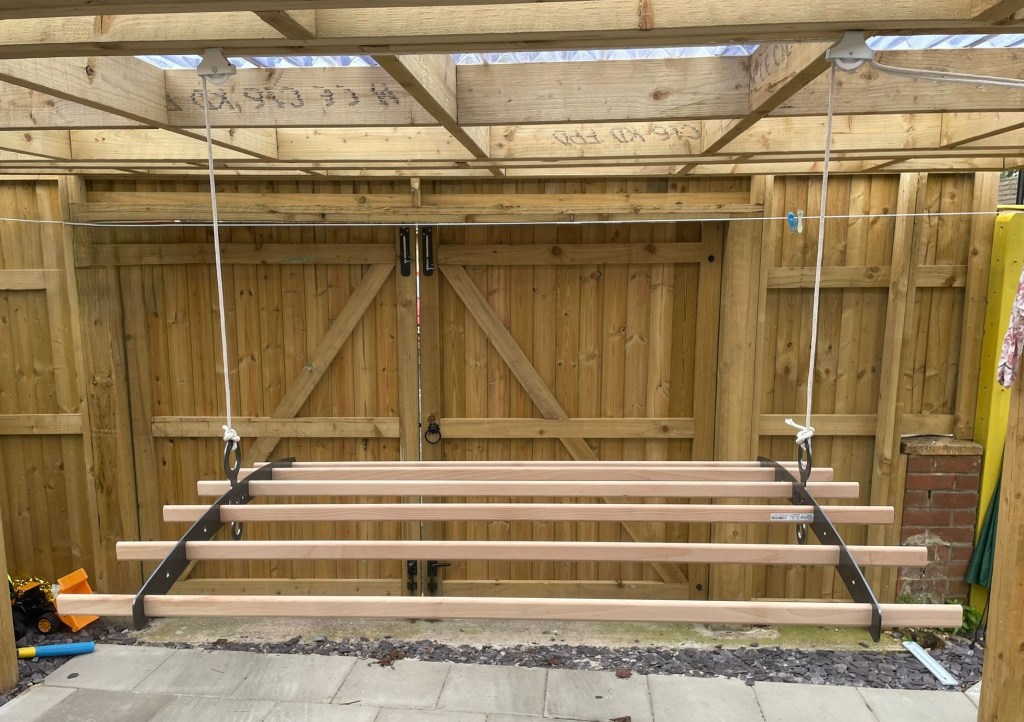
I wanted to buy a pulley maid to fit under the carport and dry clothes in a slightly more efficient arrangement than just using the washing lines (density is everything – clothes drying real estate is a hot commodity round these parts).
However – the offerings available are; expensive, foreign made, and almost exclusively – tacky.
I can’t guarantee that I can make something ‘prettier’ but I can certainly improve on the other two.
I set myself a limited brief for this little project, as below.
- Simple design.
- Made locally, wherever possible.
- Can’t be too restrictive on this front and hope to keep the product at a reasonable price point – the road to hell is paved with good intentions…
- Off the shelf parts are almost always preferable to a custom part.
- ALMOST always.
- Engineering rule number one should be never make anything you can buy, it’ll take twice as long to make and be half as good.
- Where an off the shelf part is of a good enough quality, origin and price point – I’ll always choose to use that rather than design in a custom part. Put the resources where they are most useful, no need to reinvent the wheel.
Design
The design of this wasn’t onerous by any stretch – a couple of hours maximum. Mostly just me trying to reign myself in with the over engineering. Initially an 8 lath design, with an arc span of about 1000mm – however the second revision was brought down to 6 laths and 750mm. Reducing from 8 laths to 6 keeps the cost down, and makes the product more suitable for different spaces. The beauty of these is that the length is (almost) infinitely adjustable – the laths are commonly available in 2400mm lengths.
Manufacture
I’ve chosen to manufacture this from 3mm mild steel – a large part of me wanted to make this from stainless steel – but the costs are just so much higher – owing to material costs and the need to use nitrogen etc. when cutting stainless using a laser. Manufacturing from mild steel necessitates painting the parts due to application – but that’s no problem.
Metal
I’ve been fortunate to find a firm local to me – really local to me – within 2 miles – that can laser cut the profiles from my designs on the steel. Sincerely hoping to do more work with them in the future, their capacity is quite impressive for a small firm.
Wood
The laths are being supplied by Cheshire Mouldings, 12mm x 30mm – rounded edges – hardwood – European timber. These are really quite nice – far nicer than they need to be for the application. A light coat of Danish oil and they’re ready to be fitted. I’ve designed this to use 12×30 laths as to keep the end unit cost as low as possible – these aren’t typically marketed as airer laths – and as such don’t attract the 150%~ premium (look up replacement airer laths on eBay – and see what I mean).
Rope
I never really considered the provision of UK manufactured rope till I started working on this – but I was pleasantly surprised to find a local manufacturer of seriously high quality pulley rope. James Lever of Bolton have been producing high quality rope and twine in Lancashire since 1856. I’ve chosen the ‘Everlasto’ pulley rope – this is competitively priced and of a very good quality. I found it very reassuring to find that not every last strand of our cotton industry has been confined to the history books.
Pulleys
The bad news, short of contracting a blacksmith to forge these for me as a custom job (note design condition 3) – I was going to have to purchase an overseas made part. A concession that had to be made to stick to my self imposed brief. The pulleys are made in India for ‘Merriweather’. That’s about all I care to know for the product. The quality is more than adequate, anyway.
Conclusion
A nice little project – met the brief – made the product.
One more product being produced in the UK.
 Durham Engineering